
Arts, Culture & Nature-Based Projects
Community Engagement
Creative Leadership for Programs & Organizations
Public Outreach, Literary & Educational Projects

Creating memorable experiences has a deep impact on story. As a creative developer, graphic designer, illustrator, and editorial collaborator, I work with creative professionals, community builders, publication editors, program leaders, and teams. From creative development for print publications, interpretive signs, exhibit display panels to nature-based and community-building projects and public awareness initiatives, I help clients define stories and bring creative projects to life.
If building connections with local community and fostering meaningful ongoing relationships or public action are your goals, you can work with me to bring thoughtful process to every step of the project.
As a visual artist and writer, Minnesota Master Naturalist Volunteer, member of Climate Land Leaders, and years of work arts and nature programs, I carry knowledge that is uniquely beneficial in the arts, public outreach, and environmental and nature-based initiatives.
Concept + Process + Design & Messaging
Projects With Deep Layers
Design for the Arts works with clients to provide consult, planning, and creative for programs and publications. As a women-owned business, I am certified with the CERT collaborative and an approved MCUB vendor.
Educational Exhibits, Installations, Displays & Interpretive Signs + Print Publications & Guides
Minnesota Pollution Control Agency (MPCA)
Minnesota Humanities Center & Partners
We Are Water MN Traveling Exhibit
Audio Tour Script Writing & Display Panel Writing
+
Metropolitan Council
Environmental Services (MCES)
Sustainable Landscapes Program
Template Design & Illustration for Program Materials, Signs, and Interpretive Signs, Copy Editing, Digital Accessibility
+
Hamline University
Adopt-a-Drain Program
Brand Advisor, Design & Illustration, Marketing Guide Design (46 pages), Marketing Website Design, File Name Convention & System Design (this national program has an expanding library of standard and custom marketing materials that as more partners join from new cities and states), Multimedia Gallery consult and icon design for Adopt-a-Drain K-12
+
University of Minnesota Extension
Minnesota Master Naturalist Volunteers
20-Year Annivrsary Publication Design,
Illustration for a Timeline Feature, Design of Graphs, Accessibility for downloadable PDFs (archived at the University Digital Conservancy)
Hand Papermaking
Hand Papermaking Magazine
Magazine Design (2017 to present), Design Director, Print Production Management, Brand Guideline Creation, Assistance with Developing Digital Editions
+
Minnesota Historical Society
Foshay Tower Museum
Interactive Kiosk Design & Project Management
+
Minnesota Education Equity Partnership
Logo Refinement, Web Design, Site Architecture & Project Management, Higher Education Toolkit Design, Creative Direction for Key Images, Annual Report Design
+
Hamline University
Center for Global Environmental Education
Multimedia Gallery UX consult and icon design, Newsletter Style & Strategic Planning
+
Melinda Vaughn School Pollinator Fund
Brand Development, Web Design, Pollinator Guide Design & Creative for Events
+
Tanner Barnharst, Microbiologist
Minnesota Lichen Guide (Free PDF)
Field Guide Design & Copy Proofing — 2nd Edition (100 pages)
Producing Complex Projects
Design, Communication, and Production
Producing publications and exhibits or displays both require conceptual thinking and process development, while keeping track of the multitudes of small, yet meaningful details throughout the project.
Balancing visual flow with typographic and editorial knowledge is a skillset that I am naturally suited for across both of these media types. Print publication and public displays both involve careful planning to support project goals. Both require defining roles and developing process for copy delivery, design and copy iterations, creating style libraries, paper or material selection (which inform design and budget), and working with other teams to fabricate or print. I work with your preferred vendors and fabricators or help you source them. I can assist with best practices for managing copy from multiple sources and manage quote acquisition from trusted printers.
Interpretive Sign Feature
Met Council’s Sustainable Landscape Program
Design for the Arts worked with the senior outreach coordinator to develop materials for the Sustainable Landscape Program—an initiative that extends to 7 counties throughout the Twin Cities. The vision for this project includes improving water quality and creating a more resilient ecosystem by converting lift station properties to sustainable landscapes.
My role included setting design standards for communication materials and signs, including fact sheets, postcards, event boards, boundary signs, and permanent interpretive signs. I collaborated with team members and field experts to create and refine copy with the goal of educating residents about benefits and timelines for establishing native plantings, bee lawn, and prairie, woodland, and wetland habitats. Adhering to Met Council’s brand standards, I designed templates for the Sustainable Landscapes Program that contractors will use to create materials for each installation site. One of the highlights of this project was creating a signature illustration for the program and a set of ecosystem illustrations for permanent interpretive signs that are installed at each location as they are completed.

Trumpeter swans, American goldfinch, rusty-patched bumble bee. Prairie: Purple coneflower, big bluestem, wild geranium, butterfly weed. Bee-lawn: Dutch white clover, creeping thyme. Wetland: Sensitive fern, horsetail, ostrich fern. Woodland: Red oak, white oak.
As a Minnesota Master Naturalist volunteer, I referenced trusted resources for Minnesota native plant and flowers. Our team met with local landscape installation team leaders and we received guidance from an expert in the nation’s largest ecological restoration company to ensure that themes, messaging, and installation details aligned with the overall vision of the project. The interpretive sign highlights how plant diversity and native plantings contribute to clean water and ecosystem resiliency and marks the establishment of each landscape.
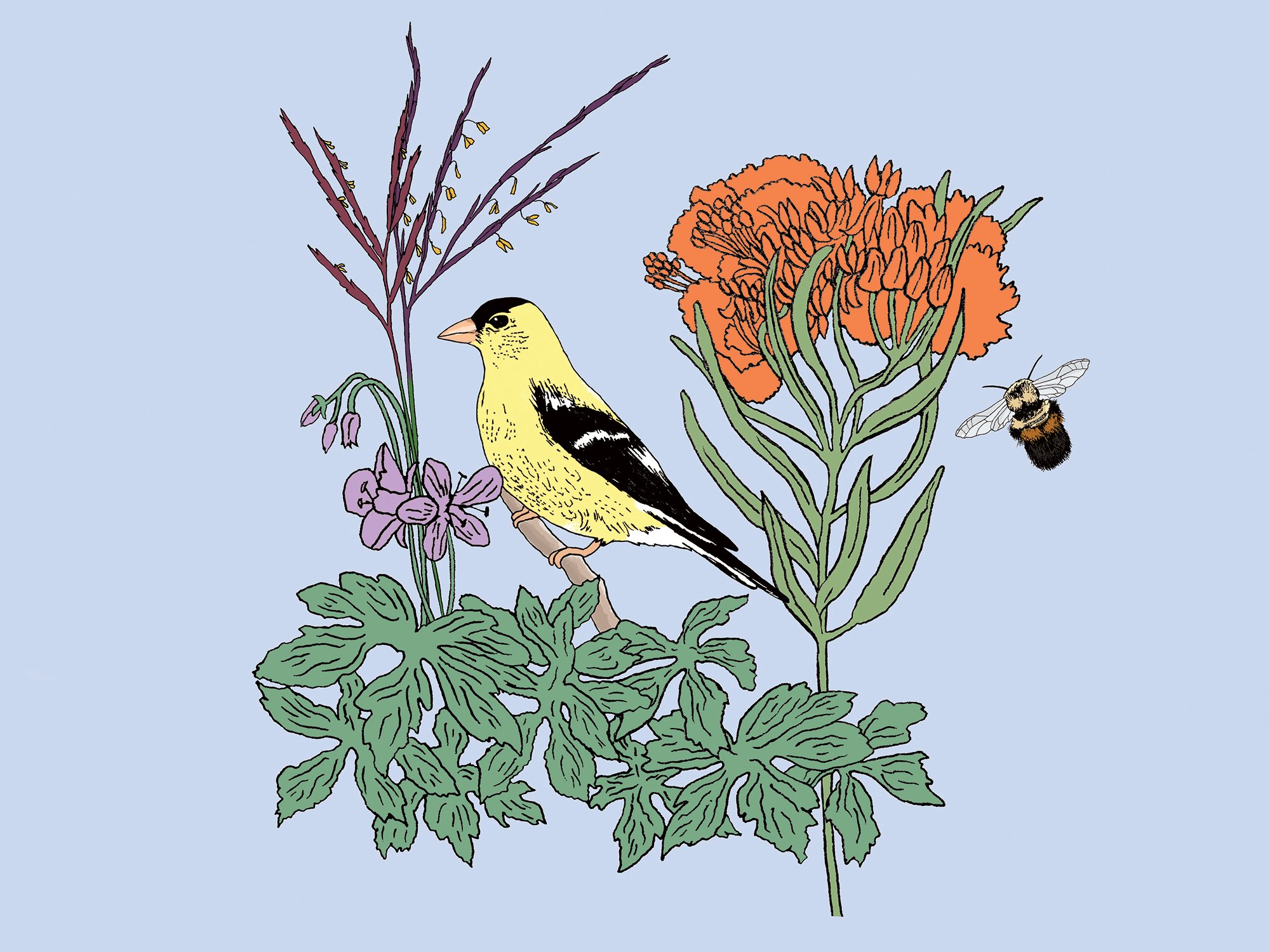
Met Council’s Sustainable Landscape Program Signature Illustration: American goldfinch, rusty-patched bumble bee, big bluestem, wild geranium, butterfly weed.